About me

I am from Atlanta Georgia. My name is Jackson Barnes i was the varsity basketball captain for three years.i am a leadership sandy springs graduate

i also am a graduate of chick fil A Leadership. i won male athlete of the year and i was all conference in sports.

Tuesday, July 15, 2025

Greenbook Reflect

The Green Book: A Fantastic Movie Experience

The Green Book is a fantastic movie that depicts an African American gentleman who was a fantastic piano player. Who employed a white man, but they lived in New York, so it wasn't abnormal up there, but he had to travel down south for his concerts or his events.

The Unusual Dynamic. 


And that was super abnormal for the South to have an African American man employing a white person. So they experienced a lot of racism and judgment on their tour, but they also had a lot of support because of how good the guy wasn't playing piano, they called him a doctor when he wasn't a doctor. Greenbook historical context

But he was such a savant at playing piano that people were so amazed by his piano playing that he got to play in areas where African Americans wouldn't dare even go, but he still had to stay in really crappy motels.

What Made the Movie Special 


The main part of the story/movie that I enjoy is the connection between the two characters. No matter what, he always protected him no matter what. And how different societal norms are from northern states to Southern States, because the movie took place in 1962, and we're still battling stuff like that.

And the fact it was based off a true story makes it even more incredible the movie was very well written to and the dialogue in the movie was incredible one thing I did learn in the movie was that how much different the North in the South were in terms of segregation I knew it before but I didn't know that it was as much as I expected because it was just really incredible how the different people interacted with one another.

Two Different Worlds              


It was truly incredible to see the difference between the two societies, and it was almost like being in two different countries. Even now, it was still the United States of America. It just amazed me, the movie was just so well written, well directed, great acting, it was wonderful all over, and they won three Academy Awards was just amazing.

And I'm really glad we got to watch it as a class, it was just so awesome.

A Talented Performer Who Overcame

She was so talented that even though he was African American, he still was able to perform in those places, and he still went through segregation and he still went through racism, but he didn't let that face him. He still played the piano, and he still made things work no matter what.  Green book audience opinion

It was truly incredible how they were able to write that in and how historically accurate it was based on the true story. It was a wonderful movie and I'm happy I got to see it I've been meaning to see it for a while now it came out in 2018 and I never got an opportunity to watch it and I'm glad I got to watch it now the green book was an amazing movie and I hope to watch more movies like that in the future.


links Green book audience opinion

Monday, July 14, 2025

reconstruction era/video

The Reconstruction Era: A Difficult Period in American History

The Reconstruction Era that lasted from 1865 to 1877 what's the time period in which America was recovering from the Civil War and post slavery. it was especially difficult when President Abraham Lincoln was fatally shot and Andrew Johnson who was not as prone to having slaves freed as his predecessor Lincoln, took over.Johnson vetoed many bills and was against everything Congress put forth. Johnson was even impeached but was acquitted by one vote in the senate. the Reconstruction Era was especially difficult for all of America due to the destroyed infrastructure of everything and how everything was complete obliteration and people still had to accept the fact that slaves were free.

Farmers continuously were against it because they didn't know who would help their crops grow or who work on the farms people still had racial bias towards African americans. people still treated them differently people still had biases and people still did not treat them with respect. Just  because the Civil War was over doesn't mean everything went back to normal and everyone accepted the outcome people are still very much against the slaves being freed people made it very difficult to rebuild the country including President Johnson.

it was especially difficult because the nation will still divided and it still was trying to recover from all the damage that was done in the Civil War but some people wanted to help and some people made it difficult therefore it reconstruction took way longer then it needed to because People started making laws restricting African Americans from voting putting up obstacles so people especially African Americans who would make it harder for them to have rights to vote it also had a lot to do with people still having prejudice just cuz the Civil War was over didn't mean people didn't see African Americans as below them or that they saw them as not equal just  because the Civil War was over Really didn't mean anybody was free there were still a bunch of obstacles that were ahead and there was a lot of work to be done.

for people especially African Americans to become integrated with Society because people still didn't treat them with respect people still put up obstacles Including literacy test so African Americans could vote but African-Americans when they were slaves we never taught to read and write so it made it unfair for them so they couldn't pass because they didn't have the education or literacy to do it. so it was a rigged system that they put in place because they couldn't accept the outcome they lost the Civil War and that the slaves were free. the Civil War ended but a new era began the Jim Crow era  which basically put up obstacles for African Americans to do anything just to make it harder thinking they would give up and not try and be integrated in society. because they just couldn't accept the outcome and it's unfortunate and they're still working done to this day.                 


Sunday, July 13, 2025

Plessy v Furgson past case argument./ Trial/ETO

🏛️ The Separate Car Act Does Not Violate the 14th Amendment

There has been a legal challenge to the Separate Car Act, with opponents claiming it violates the 14th Amendment and the Equal Protection Clause of the U.S. Constitution. However, this argument is unfounded when examined in light of the law, constitutional boundaries, and legal precedent.

Understanding the Separate but Equal Doctrine

The Separate Equal Doctrine allows for equal protection under the law for all individuals—it simply does not abolish distinctions based on color. While the 14th Amendment gives every individual the right to due process and American rights, it does not specify that African Americans and white citizens have to be co-equals in society.

Equal Protection Still Applies

The Separate Car Act does not violate any due process laws or remove any rights guaranteed to African Americans. It maintains that public and federal facilities may be separated by race as long as equal services are provided, and no basic rights are infringed upon. Thus, the law falls well within the authority of federal and state legislators.

Legislators' Rights to Enact Separation Laws

Both federal and state legislators have the right to pass laws that keep races separated in public services, so long as these laws do not violate the core rights guaranteed to all Americans under the Constitution. The Separate Car Act does not strip away due process or equal protection—it simply acknowledges societal preferences and protects individual choice without infringing on anyone’s rights.

Hall v. DeCuir (1877): A Relevant Precedent

In Hall v. DeCuir (1877), the Supreme Court addressed a Louisiana state law that required equal treatment for passengers on public transportation. The Court struck the law down—not because it opposed equality, but because it conflicted with federal authority over interstate commerce. Importantly, the ruling recognized that the government cannot force individuals to treat everyone equally in terms of personal association.

Read the full case here: Hall v. DeCuir | 95 U.S. 485 (1877)

This decision clearly shows that neither federal nor state governments have the constitutional right to dictate personal preferences or force people to like or associate with others.

No Rights Are Taken Away

African Americans still retain every basic right afforded to them by the Constitution, including the right to due process and legal protections. The Separate Car Act does not infringe on any of these rights—it merely separates public services in a way that reflects individual choice and legislative discretion.

There is no federal statutory law requiring that people must treat everyone the same. While equality in access and services must be guaranteed, social association is not mandated by the Constitution. The government cannot and should not tell people who they must or must not be around.

Conclusion: Uphold the Law

This issue has already been before the Supreme Court in a nearly identical context. In Hall v. DeCuir, the Court ruled in favor of limited government overreach and individual rights of association.

I respectfully ask the highest court in the land to rule in favor of the State of Louisiana. The Separate Equal Care Act does not violate the 14th Amendment, and does not strip anyone of constitutional rights. People retain due process, freedom of choice, and equal legal protections. This law merely reflects that people should not be forced into environments they are uncomfortable in, and that states have the right to legislate accordingly.

Let us not confuse equal rights with forced association. The Constitution protects freedom—not mandated integration.

I rest my case.


Citation Hall v. DeCuir | 95 U.S. 485 (1877)

https://www.ebsco.com/research-starters/law/hall-v-decuir


Thursday, July 10, 2025

GWTW Reflect


Gone with the Wind: A Timeless Epic of Love and War.

Gone with the Wind is a story about the Civil War and love. It follows the family in Louisiana, and it follows slavery and how slavery is still prevalent during the time. The family is a wealthy family that owns house slaves, and it also discusses how they had to flee the South, and it also counters with love. It follows a storyline of multiple men trying to get with one girl, but then the most unlikely person becomes the main male character.

A Cinematic Masterpiece.

Gone with the Wind was considered one of the greatest movies of all time due to its ahead-of-its-time storytelling. And also, how much of it was historically accurate, talking about the period. In-house slavery was prevalent, and people's day-to-day life was affected by slavery. It also talked about the love life of two individuals and how, on the one hand, someone came from a rich family. Who currently owns slaves, and it also follows. The other character in the story, who is more of a troublemaker and has a mysterious past, it was not explained in the movie what had passed. My favorite character in the movie was definitely Rhett Butler who was played by Clark Gable He is the perfect example of a male lead actor in a romance film he's very small he's very smooth he sort of has a bad boy attitude. GTW

Masterful Storytelling

The movie really does a good job of tying love and the brutality of the Civil War all in one storyline. But the main part of the story that The People are really big fans of is how it ties humor with a serious subject matter. Because what follows are funny Quotes in a movie that has a pretty serious storyline. Critics raved about how it tied in humor with a serious subject matter. It also does a really good job of making character development a crucial part, and of how the characters are written within the story. And how each character in the movie is written in a way that they all have a part in the story, compared to other movies in that period that sort of just followed one main character. Instead of having multiple meaningful characters and not focusing on one dialogue for one character, and everyone else in the movie was just sort of there, it was one of the first movies to develop the supporting actor and actress character trend.The story behind the masterpiece

Technical Innovation                                          The movie was considered way ahead of its time because of how it made scenes look incredibly realistic without the use of CGI or any modern technology. It really does a fantastic job of depicting scenes that utilized props rather than CGI, and how they made it look incredibly realistic. And how they made things seem watchable and believable, even though it was made in the late 30s, which had nothing like the technology we have today.

Personal Reflection

Gone With the Wind was a fantastic movie, and I learned a lot from it. I learned what families had to go through with the loss of their children fighting in a war. I sort of got an idea of what a day in the life of a slave was like in the movie. It was overall a fantastic movie, and I'm glad I watched it.


Sunday, July 6, 2025

Leonard Grimes

          Leonard Grimes: From Witness to Freedom Fighter

A Life Transformed by Witnessing Injustice

i am Leonard Grimes i was born a free man in Loudoun County, Virginia, but my comfortable early life would soon be shattered by the brutal realities of slavery. During my twenties, while on a journey through the South, I Leonard Grimes witnessed firsthand the horrific treatment of enslaved people. This experience transformed who i am from a passive observer into what many considered a radical anti-slavery advocate.

From Hackman to Underground Railroad Conductor

When I returned home, I made a life-changing vow: that would dedicate myself to helping freedom seekers. I became a hackman in the District of Columbia, using my position strategically to assist runaway slaves escaping from Virginia. my work with the Underground Railroad was extensive—i was able to help an unknown number of escaped slaves, though the exact amount remains undocumented due to the secretive nature of the operation.

The Price of Freedom Fighting

my activism came at a steep personal cost. In 1839, I Grimes was arrested and convicted for my Underground Railroad activities. The court sentenced me to two years of hard labor and fined him $100—a substantial sum at the time. But imprisonment only strengthened my resolve.

A New Chapter in New England

After my release, i moved to New Bedford, Massachusetts, and then to Boston, where I became a minister at the Twelfth Baptist Church. In this new role, I gathered widespread support against the Fugitive Slave Law and raised funds for fugitive slave assistance. my church became known as "The Fugitive Slave Church" due to its role in harboring freedom seekers.

Major Cases and Heroic Efforts

I Reverend Grimes participated in every major slave case of his era, including the high-profile cases of Thomas Sims, Anthony Burns, and Shadrach Minkins. I traveled extensively to raise funds for Anthony Burns' release, demonstrating my unwavering commitment to individual cases while maintaining my broader mission.

Civil War Advocacy and the 54th Massachusetts

During the Civil War, I joined the chorus advocating for Black soldiers, which led to the creation of the famous 54th Massachusetts Infantry Regiment. I believed that if African Americans could serve in the Civil War, they could help the Union defeat slavery once and for all.

completely abolish slavery. I actively recruited the slaves he had helped to join the Union forces.

The Union's Secret Weapon

Many people believe that my efforts in recruiting African Americans to join the Union significantly contributed to the Union's victory over the Confederacy. my strategic thinking proved prophetic—Black soldiers became a crucial factor in the war's outcome.

Criticism and Perseverance

Despite all of my heroic efforts, I faced criticism from some Critics who argued that as a free-born man, he had no right to speak on slavery since he had never experienced bondage himself. But Grimes refused to be silenced by such arguments and continued helping slaves flee from cruelty.

Full-Time Freedom Fighter

Near the end of my life , I made another significant transition. I quit the ministry to become a full-time conductor, running the Underground Railroad to help freed slaves travel to Canada, where their former masters could not find them or prosecute them for running away. He used his connections from his ministry to raise money for Underground Railroad operations.

Legacy of a Hated Hero

I was despised by slave owners who recognized me as a formidable threat to their human property. But I wore their hatred as a badge of honor, knowing that every slave I helped achieve freedom was a victory against an inhumane system. I purchased carriages specifically to provide transportation for fugitive slaves, helping them escape and avoid prosecution.

A Life Well-Lived

Leonard Grimes died in 1873, but his legacy as a tireless advocate for anti-slavery causes lives on. His life demonstrates how witnessing injustice can transform an individual into a powerful force for change. From his early days as a hackman to his final years as a full-time Underground Railroad conductor, Grimes proved that one person's commitment to justice can help hundreds achieve freedom.

His story serves as a powerful reminder that the fight for human rights requires not just sympathy, but action, and that sometimes the most effective advocates are those who choose to stand up against injustice, regardless of whether they've personally experienced it.


Sources: AI


Thursday, July 3, 2025

Bible Team Challenge


Throughout southern culture slavery has always been Key Finding The Bible does not present a unified stance on slavery, containing both passages that can be interpreted as supporting human dignity and freedom, as well as passages that regulate rather than condemn slavery. Passages Often Cited by Opponents of Slavery


The concept of Human Dignity https://www.antislavery.org/  
:The concept of humans being created "in the image of God" (Genesis 1:27) suggests inherent human :An individual having free will: The Exodus narrative depicts God liberating the Israelites from slavery in Egypt. : https://www.ijm.org/

Brotherhood: Paul's letter to Philemon encourages treating a runaway slave as a "beloved brother."

:That no one should have one hundred percent loyalty with any other human other than godGalatians 3:28 states there is "neither slave nor free" in Christ.


The argument of the founding principle that all humans shall be treated equal: The foundational principle that all humans are created in God's image (Genesis 1:27) provides a theological basis for human dignity and equality. The Golden Rule - "do unto others as you would have them do unto you" - conflicts with the practice of slavery. The Exodus narrative celebrates liberation from bondage, and prophetic literature often champions justice for the oppressed.


Conclusion

What we discovered is that there is no definitive answer and there are contradicting statements for both sides. Legal scholars continue the debate on if the bible condoms slavery or if it supports it 


Tuesday, July 1, 2025

History of the Supreme Court

Understanding the Supreme Court: The Highest Law of the Land

The Supreme Court of the United States is one of the most respected and powerful institutions in the country. It started in 1789 with just six justices, but that number fluctuated between five and ten until 1869, when it was set at the nine justices we know today. The Supreme Court’s structure and process have evolved, but its role as the final authority on constitutional matters has remained constant.


How the Supreme Court Works

The process starts when someone files a petition. Out of thousands of petitions each year, only a handful are chosen for review. A group of nine judges—arguably the most powerful in the United States—hears the arguments and then meets in a private room, with only the justices present, to discuss and vote.


When a decision is reached, the justice who votes with the majority writes the official opinion. Justices who disagree can write their own dissenting opinions. These rulings are critical because the Supreme Court’s interpretation of the Constitution becomes the law of the land. Once the Court makes a decision, it’s final—unless the Court itself decides to revisit the issue in the future.


Landmark Case: Dred Scott v. Sandford

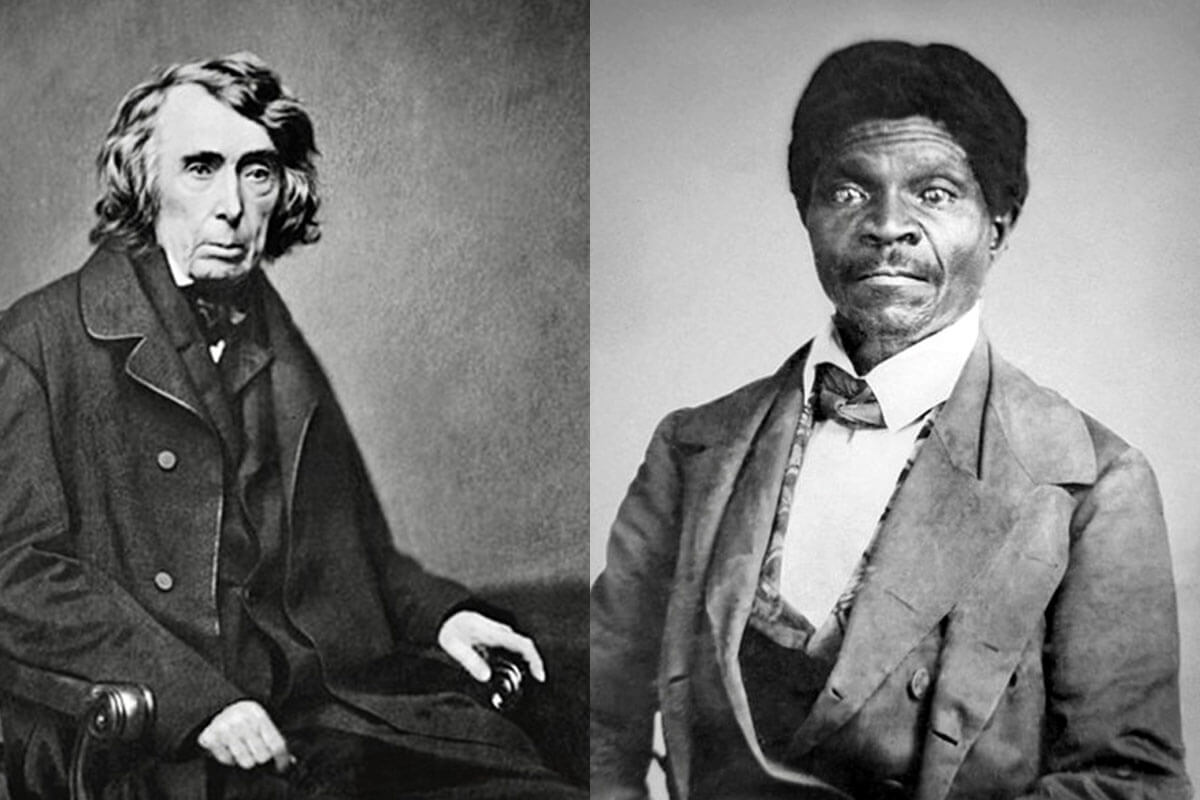
One of the most infamous Supreme Court cases was Dred Scott v. Sandford in 1857. The Court ruled that African Americans were not citizens and therefore could not sue in federal court. This decision is widely considered one of the worst in history. It helped spark the Civil War and inspired the 13th Amendment, which ended slavery.


The Court’s Influence and Legacy

The Supreme Court’s most significant changes came under Chief Justice John Marshall, who served for 34 years. Landmark cases like Marbury v. Madison and Gibbons v. Ogden set important precedents for federal power and judicial review.


The Court decides whether state or federal governments have authority over certain laws and regulations. For example, in recent years, cases like Roe v. Wade have shown how the Court can uphold or overturn major legal precedents.


Appointment and Perception

Justices are appointed for life by the President and must be confirmed by the Senate. The President usually has a shortlist of candidates ready in case a vacancy arises due to retirement or death. While the Supreme Court is supposed to be bipartisan, some argue that justices are loyal to the presidents who appoint them. Still, most Americans believe the Court is fair and strives to put politics aside.


Conclusion


The Supreme Court has existed for nearly the entire history of the United States. It is a complex and highly respected institution that serves as the final word on all court rulings. Its decisions shape the nation, and its legitimacy is rooted in its commitment to upholding the Constitution and ensuring justice for all.


The Long Shadow of Dred Scott: Impacting California Workplaces1,200 × 800